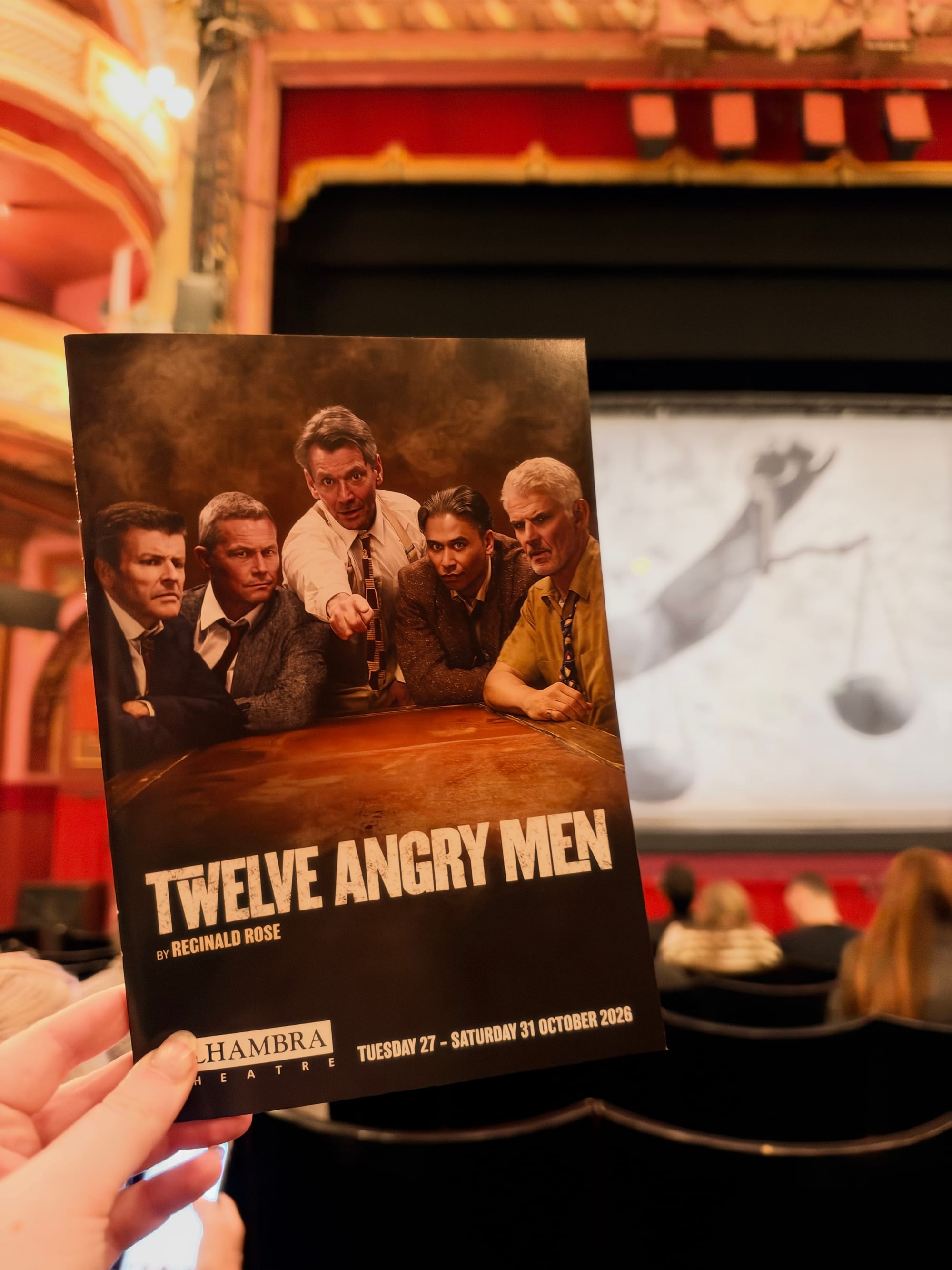
Twelve Angry Men.
The Alhambra Theatre.

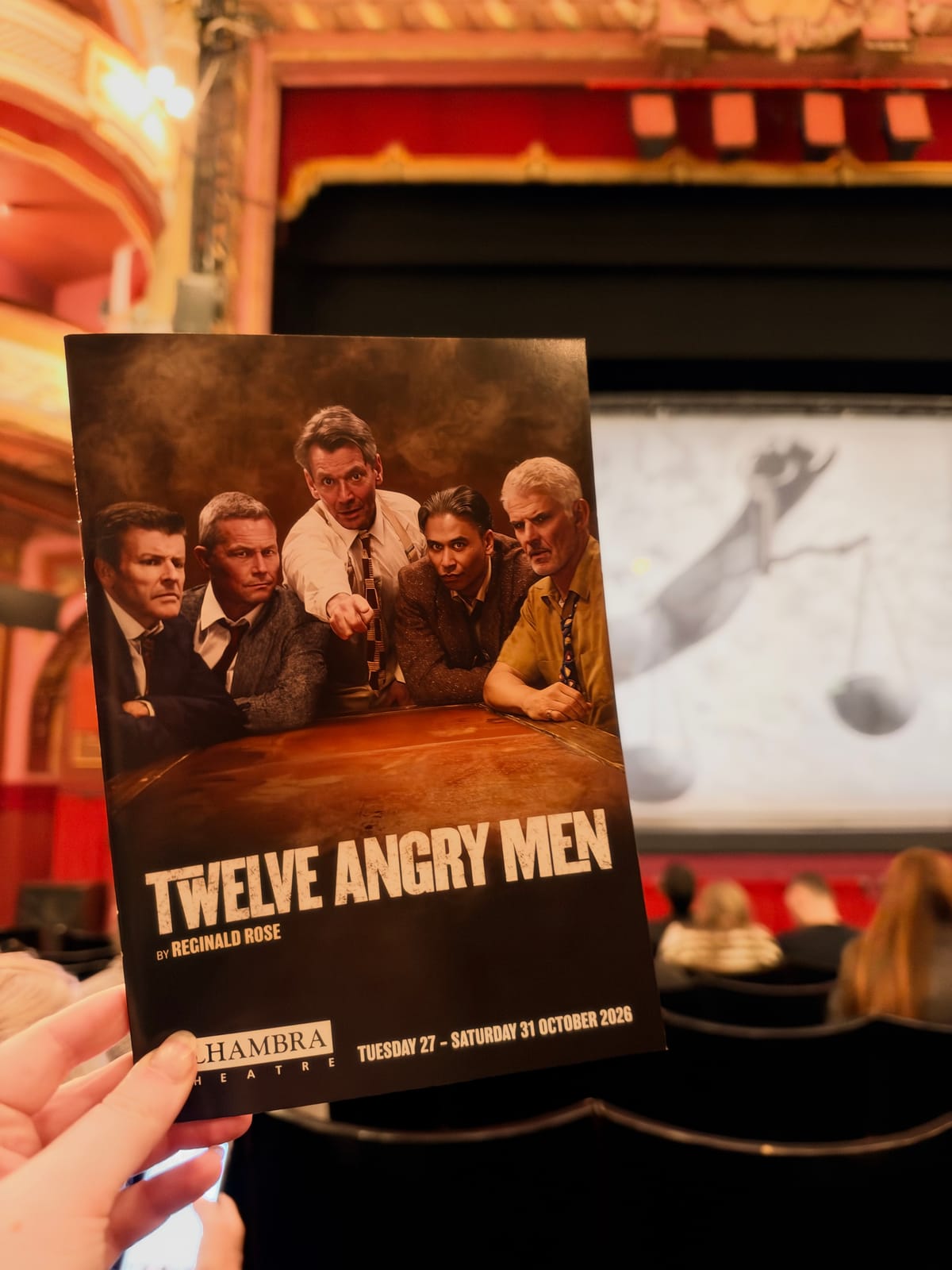
This week, I headed to the Alhambra Theatre in Bradford for press night of Twelve Angry Men. A huge thank you to Philippa and the team for organising the evening.
Unlike many of the theatre shows I have reviewed, I went into this one knowing absolutely nothing about the original film or how the story would unfold. I was going in completely blind, as they say!
Written by Reginald Rose, Twelve Angry Men follows twelve jurors who have been tasked with deciding the fate of a young man accused of murdering his father. What initially appears to be a straightforward case becomes increasingly complicated when one juror begins questioning the evidence. With a unanimous verdict required, the men must examine the facts, challenge one another's arguments and confront their own assumptions before reaching a decision that could cost someone their life.
There are no elaborate changes of scenery or dramatic shifts in location. We spend almost the entire production in one jury room, watching twelve men argue over the evidence presented to them. On paper, that might not sound particularly exciting, but the tension comes from the conversations themselves and how quickly a seemingly reasonable discussion can descend into something much more personal.
As someone with a keen interest in psychology, I found the behavioural aspects of the production fascinating. The twelve jurors bring their own personalities, experiences and prejudices into the room, and it quickly becomes apparent how much these influence their opinions. There are interesting examples of group dynamics, conformity and the need for individuals to have their voices heard. Rather than simply listening to understand another person's perspective, some of the characters seem far more interested in waiting for their opportunity to speak.
Bill Ward is outstanding as Juror 3, a man whose anger and determination to secure a guilty verdict make him increasingly frustrating to watch. Ward brings enormous intensity to the role, particularly when his character refuses to consider alternative perspectives or allow others to finish speaking. Having recently appeared as the warden in The Shawshank Redemption, there are similarities in the intimidating and confrontational personalities of the two characters, something Ward portrays particularly well.
Tristan Gemmill is equally convincing as Juror 10, whose prejudices and dismissive attitude towards the opinions of others make him another particularly unlikeable character. Both actors do a fabulous job of making you actively dislike their characters, which is a testament to their performances. There were moments when I found myself becoming genuinely frustrated by their refusal to listen, particularly when other jurors were attempting to contribute to the discussion.
Gray O'Brien brings a welcome contrast as Juror 8, whose calm and measured approach challenges the assumptions being made around him. His character demonstrates how questioning the majority does not necessarily mean believing everyone else is wrong, but simply acknowledging that there may be another explanation worth considering.
One aspect that did affect the performance was the sound balance. Some of the quieter jurors were difficult to hear clearly, particularly during the more subdued exchanges, while some of the louder performances felt almost overpowering by comparison. With a production that relies so heavily on dialogue and the finer details of the discussions, this was occasionally frustrating, as it meant certain contributions were harder to follow.
However, the performances certainly delivered some memorable moments. The conclusion of the first half was particularly effective, with Bill Ward's Juror 3 provoking an audible gasp from the audience. It was one of those wonderful theatrical moments where you could hear the collective reaction around you, demonstrating just how invested everyone had become in the events unfolding on stage.
What interested me most was the relationship between the story and wider questions surrounding social justice, prejudice and human behaviour. Although Twelve Angry Men was written more than seventy years ago, the issues it explores remain remarkably relevant. We still live in a society where people can form strong opinions without considering all the available information, and where personal experiences and assumptions can influence how we judge others.
There is also something refreshing about a production that relies so heavily on its writing and performances. Theatre can be wonderfully extravagant, but Twelve Angry Men takes a much simpler approach, allowing the dialogue, characters and their conflicting personalities to create the drama.
Twelve Angry Men offers plenty to think about, particularly for anyone interested in psychology, human behaviour and the justice system. Its exploration of prejudice, reasonable doubt and the importance of listening remains relevant today, proving that sometimes the most thought-provoking theatre can come from something as simple as twelve people having a conversation.
Twelve Angry Men is at the Alhambra Theatre, Bradford, from 27th to 31st October 2026. You can purchase tickets here.