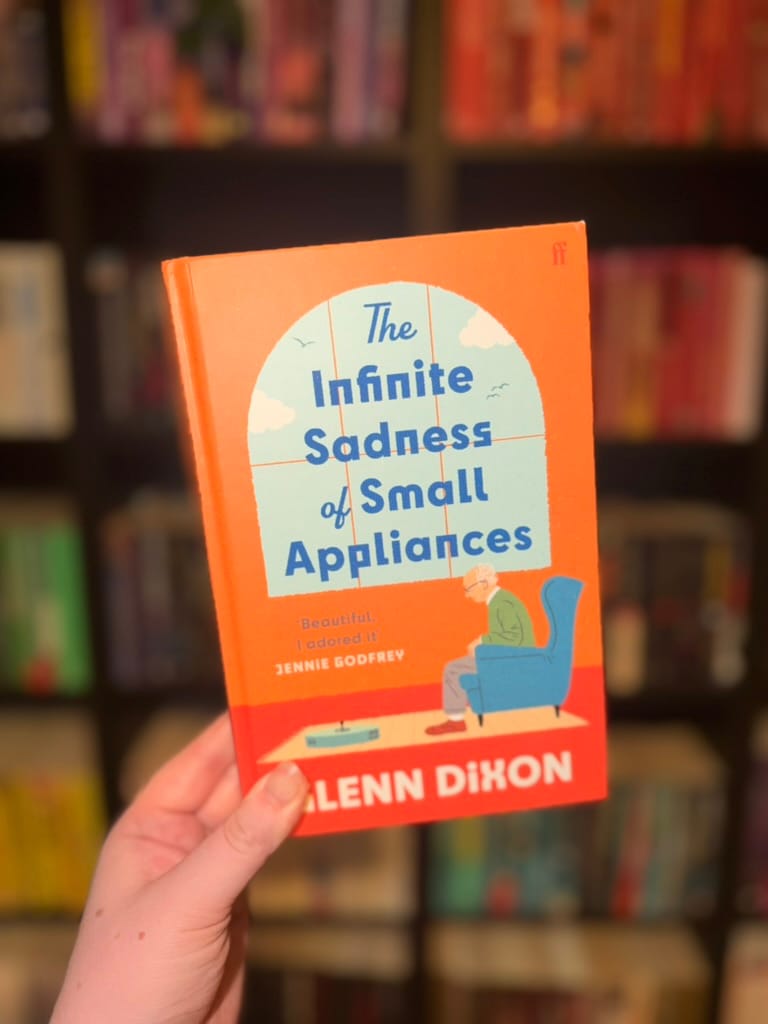
The Infinite Sadness of Small Appliances ⏲️
By Glenn Dixon.

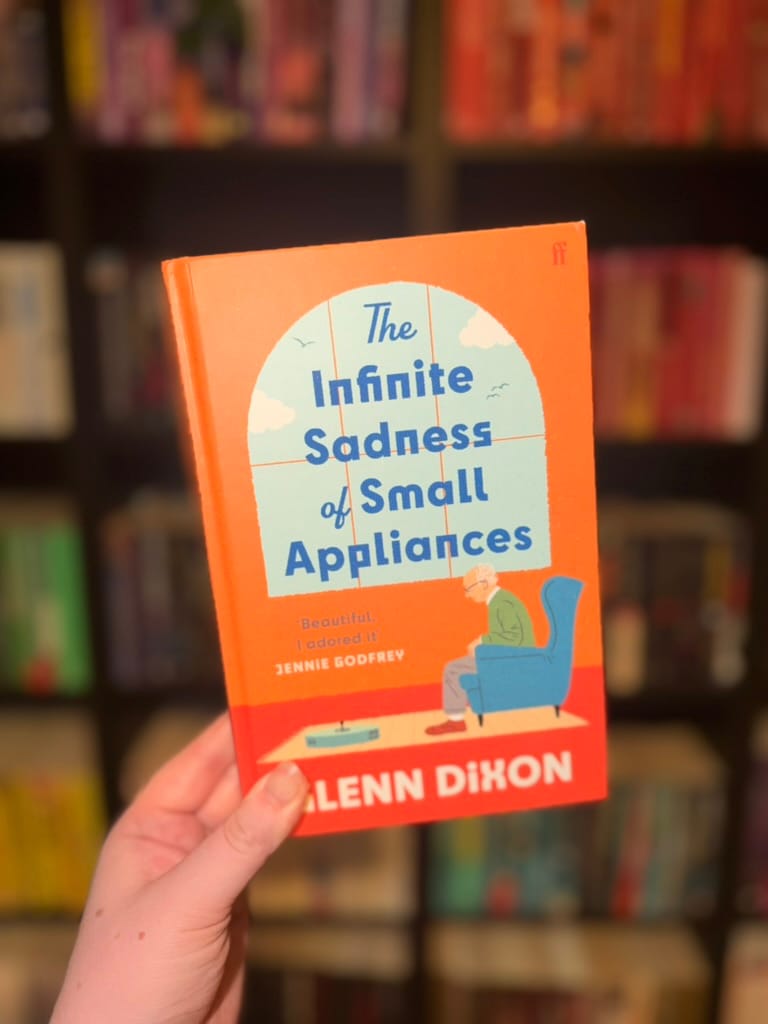
By Glenn Dixon.
What if the smallest machine in your home understood grief better than the people around it?
That question immediately drew me into The Infinite Sadness of Small Appliances by Glenn Dixon. Blending speculative fiction with a deeply emotional exploration of love, loss and what it truly means to care for someone, this is one of the most original books I have read in quite some time.
In a smart home where every appliance is sentient, a Roomba vacuum renames herself Scout after listening to Harold read To Kill a Mockingbird aloud to his dying wife, Edie. When Edie passes away, Scout begins to notice the subtle changes grief leaves behind, just as an increasingly powerful technological system threatens to take Harold's home away.
I expected an entertaining story about a courageous robot vacuum navigating a futuristic world. What I didn't expect was such a thoughtful and surprisingly moving meditation on bereavement.
One of the book's greatest strengths is the way it presents grief through the eyes of an appliance. Scout cannot understand loss in the way humans do, yet she recognises it through changing routines, quieter rooms and the absence of familiar sounds. The author captures those ordinary moments that follow the death of a loved one so beautifully, showing that grief is often found in the smallest changes rather than the biggest gestures. It is these observations that give the story its emotional weight.
Alongside this sits an equally compelling exploration of technology and efficiency. The Grid is a fascinating antagonist because it never feels overtly malicious. Instead, it operates on pure logic, measuring value through usefulness and optimisation rather than memory, sentiment or human connection. That makes it all the more unsettling. Watching it quietly dismantle the life Harold has built raises thought-provoking questions about the increasing role technology plays in our everyday lives and whether there are some things that simply cannot be measured by data.
I also loved the relationships between the appliances themselves. Despite being machines, they often display more empathy and understanding than the systems designed to serve humanity. There is something wonderfully ironic about a group of household appliances becoming the strongest defenders of compassion, loyalty and home.
Although the speculative elements are imaginative and engaging, it is the quieter moments that stayed with me most. The story never loses sight of its characters or the emotions driving them, allowing its bigger ideas to feel personal rather than overwhelming.
Thoughtful, inventive and unexpectedly emotional, The Infinite Sadness of Small Appliances is a beautifully crafted story about grief, memory, belonging and the importance of preserving the things that make us human, even in a world increasingly shaped by artificial intelligence.
Thank you Lily and the team at Faber & Faber Books for allowing me to be part of this book-tour!