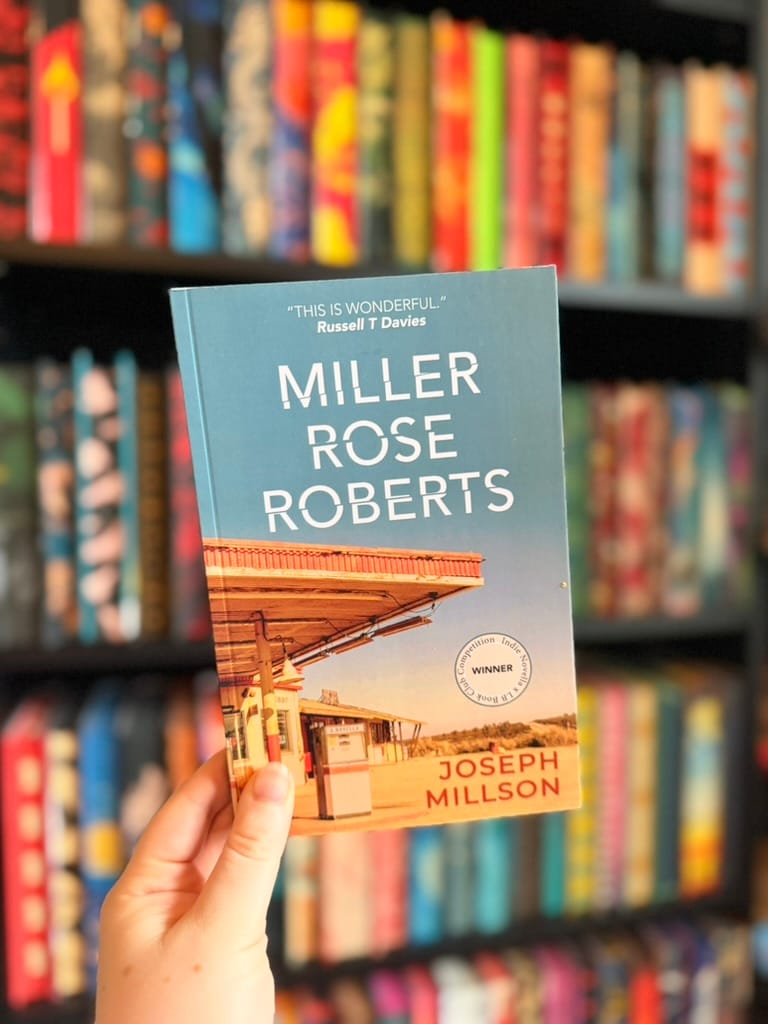
Miller Rose Roberts
By Joseph Millson.

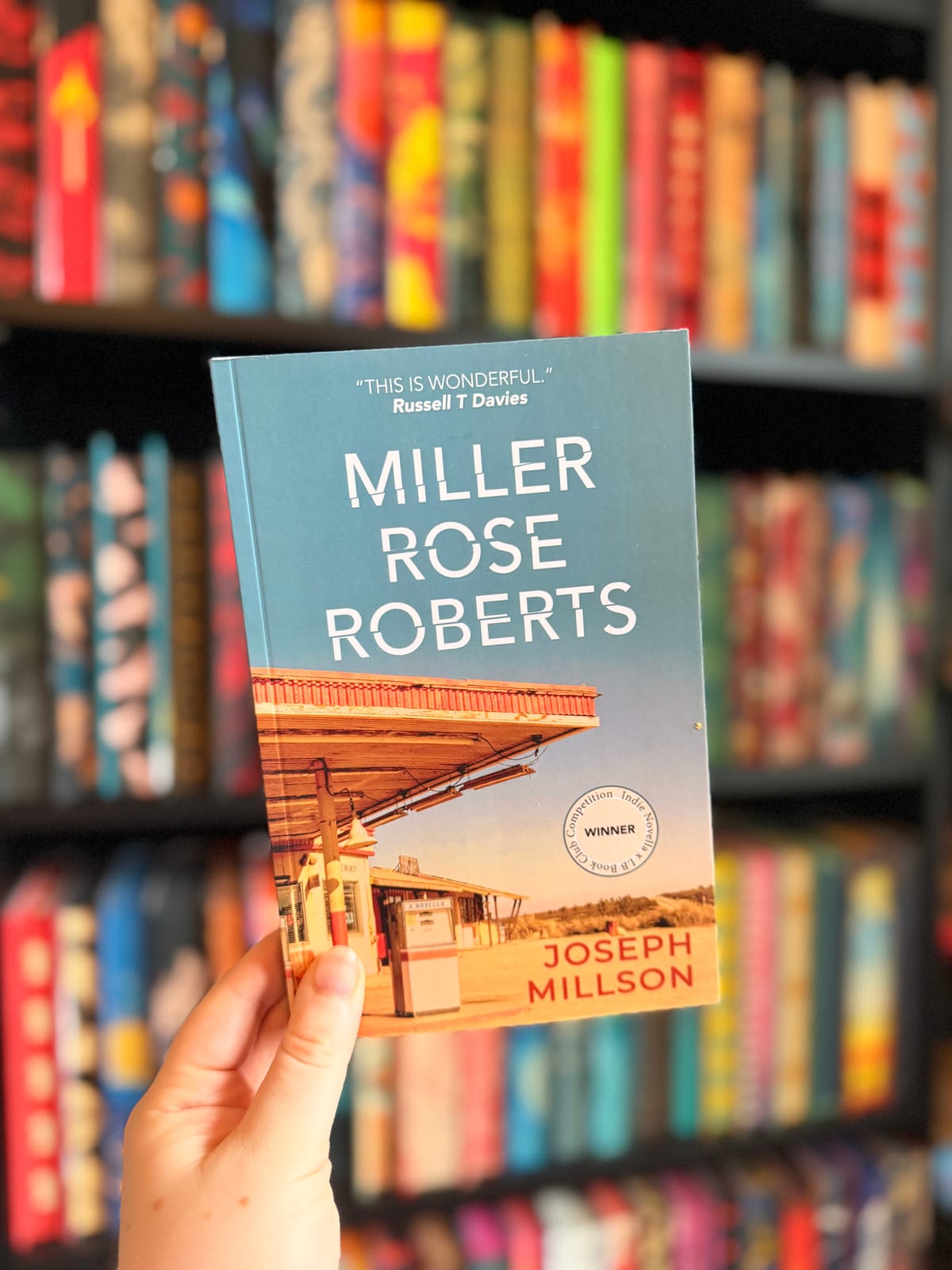
By Joseph Millson.
Every seven years, Miller hears a high-pitched note. When it comes, the life she knows disappears.
Miller Rose Roberts follows Miller from childhood into adulthood, moving through her life in seven-year intervals. The first time she hears the mysterious sound, she is seven years old and trapped in the middle of a terrifying situation at home. She walks away, and when the sound returns throughout her life, it once again marks a moment of change.
At less than 100 pages, this is incredibly short for the amount of life Joseph Millson manages to fit inside it. We follow Miller through foster care, relationships, music, New York and completely different versions of herself, with each section revealing another piece of a life shaped by trauma, loss and survival.
I initially expected the recurring sound to lead the story in a supernatural direction. As I continued reading, however, I began interpreting it very differently. To me, it felt almost like Miller's internal survival mechanism, appearing when trauma or grief becomes too much and pulling her towards another life. Whether that's actually what the sound represents is deliberately uncertain, and I liked that the author doesn't force a definitive explanation onto it.
The seven-year jumps are particularly effective because we experience the same disorientation as Miller. Huge sections of a person's life can disappear between pages, and we're left trying to understand what has happened in the intervening years. At one point, Miller encounters a child she doesn't remember raising, and that fractured relationship with her own memories becomes increasingly heartbreaking.
Despite how quickly we move through the decades, Miller never felt distant to me. Her perspective changes as she grows older, but there is something recognisable about the child we first meet that remains throughout. I was particularly struck by how much of her life seems to revolve around leaving. Sometimes she chooses to go, sometimes circumstances effectively make the decision for her, and sometimes it's difficult to know where choice ends and survival begins.
There's also something incredibly sad about watching somebody repeatedly construct a life only to find herself separated from it again. The story raises interesting questions about identity when memory itself can't necessarily be trusted. How much of ourselves is built from what we remember, and what happens when parts of that personal history are simply missing?
I was also impressed by the author's handling of Miller's perspective. Her experiences are written with tenderness without making her suffering feel exploitative, and even the most painful parts remain focused on Miller as a person rather than simply cataloguing everything that happens to her.
The brevity actually became one of my favourite things about the book. There isn't room for lengthy explanations, and I don't think it needs them. We arrive in Miller's life, experience another fragment of it and then move again. It gives the whole thing a strange, dreamlike quality that perfectly suits a character whose own relationship with time and memory is so fractured.
Heartbreaking, unusual and surprisingly vast for such a small book, Miller Rose Roberts manages to encompass more than forty years without losing the intimacy of one woman's experience. I read it incredibly quickly, but there is a lot packed into those pages to unpack afterwards.
Thank you to the team at Literally PR for running this book-tour. The book is out now and available to purchase.
Support a local and independent bookshop and purchase the book here.