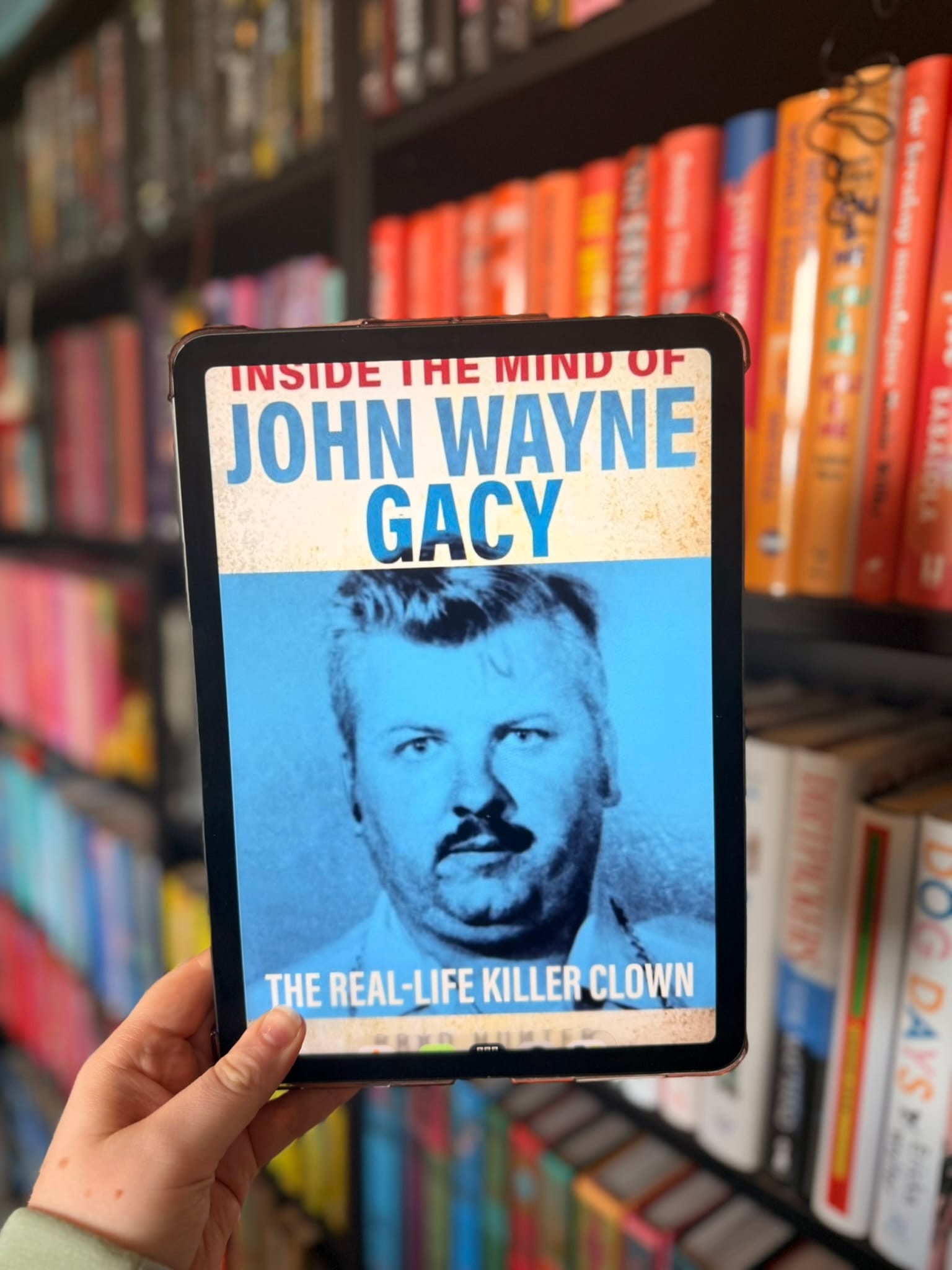
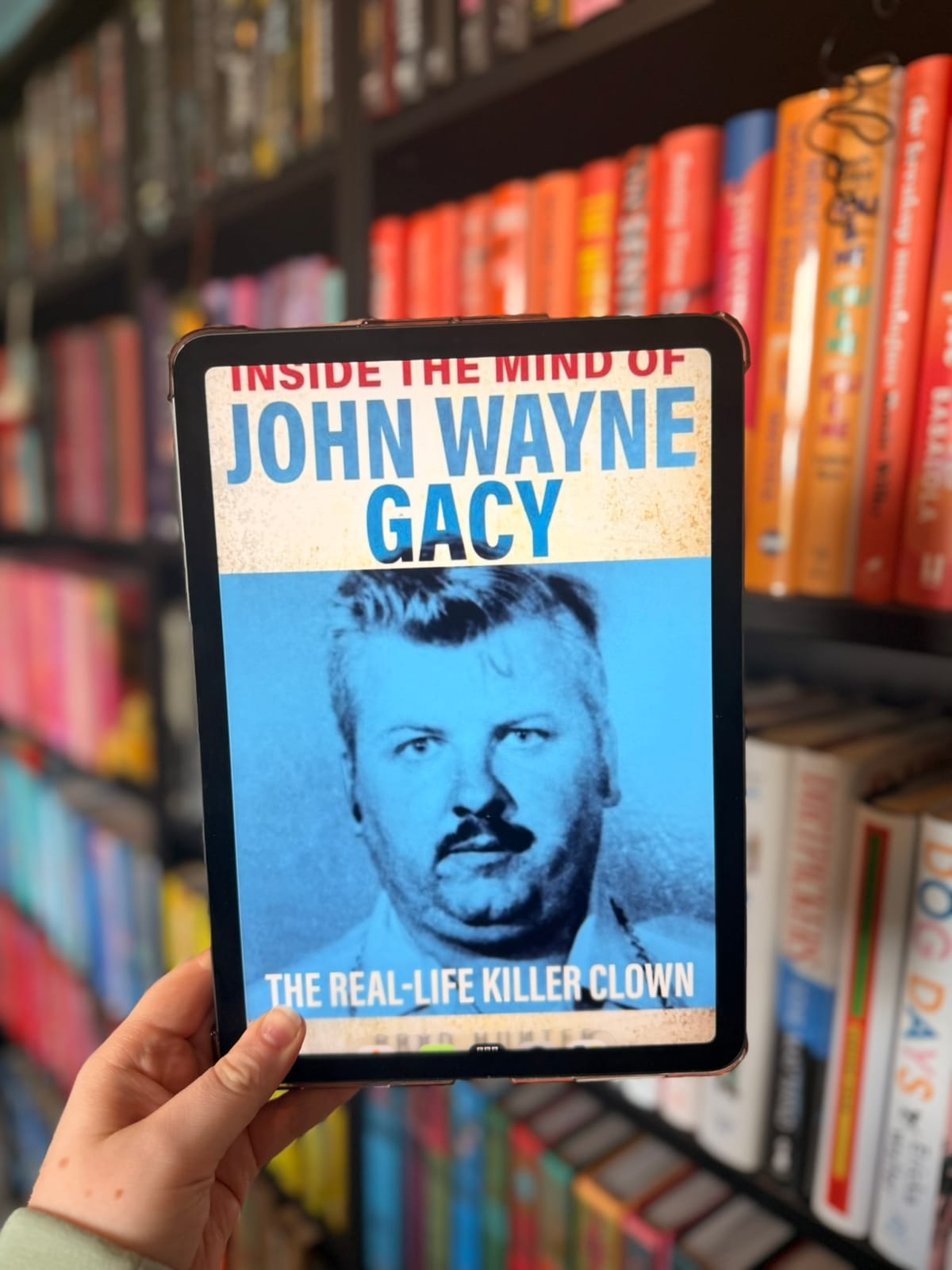
Inside the Mind of John Wayne Gacy: The Real-Life Killer Clown
By Brad Hunter.

By Brad Hunter.
⭐️⭐️⭐️
Can we ever truly understand what creates a serial killer, or are some questions destined to remain unanswered?
As a long-time reader of the Inside the Mind series, I always look forward to seeing how each book approaches some of history's most infamous criminals. Inside the Mind of John Wayne Gacy: The Real-Life Killer Clown by Brad Hunterexamines the life of one of America's most notorious serial killers, tracing his transformation from respected member of the community to a man responsible for the murders of at least thirty-three young men and boys.
The familiar design of the series immediately appealed to me, and after recently watching Devil in Disguise: John Wayne Gacy, I was interested to see whether this book would offer a different perspective on a case that has been covered extensively over the years.
One thing Brad Hunter does particularly well is ensure the victims are never reduced to statistics. Their stories are woven throughout the narrative, reminding readers that behind every headline was a person with a family, a future and people who never stopped searching for answers. That focus gives the book a welcome sense of humanity despite the horrific subject matter.
The investigation itself is equally unsettling. What struck me most wasn't simply the brutality of Gacy's crimes, but how many opportunities existed to stop him sooner. Reading about the repeated mistakes, assumptions and failures within the investigation becomes increasingly frustrating, particularly knowing how many lives might have been saved had those warning signs been taken more seriously.
Where the book didn't quite work as well for me was its overall organisation. Rather than building steadily, the narrative occasionally circles back on itself, making the chronology feel less intuitive than I would have liked. There were points where I found myself concentrating more on placing events within the timeline than becoming immersed in the story itself.
I also felt the historical context could have been used more effectively. The book spends time touching on broader events taking place across America, but I found myself wanting more analysis of the social attitudes that shaped the investigation. A deeper exploration of the prejudice faced by many of Gacy's victims, and how those biases influenced the response from law enforcement, would have added another layer to an already fascinating case.
If you're approaching the Gacy case for the first time, this is a comprehensive introduction that covers the major events while examining the psychology behind the man responsible. Readers already familiar with documentaries or previous books on the case may recognise much of the material, but there is still value in Hunter's measured approach and his commitment to keeping the victims firmly at the centre of the story.
While not my favourite entry in the Inside the Mind series, Inside the Mind of John Wayne Gacy remains a worthwhile read that demonstrates how institutional failings can be just as shocking as the crimes themselves.
Support a local and independent bookshop and purchase the book here.
Purchase the E-Book here - Free on Kindle Unlimited.