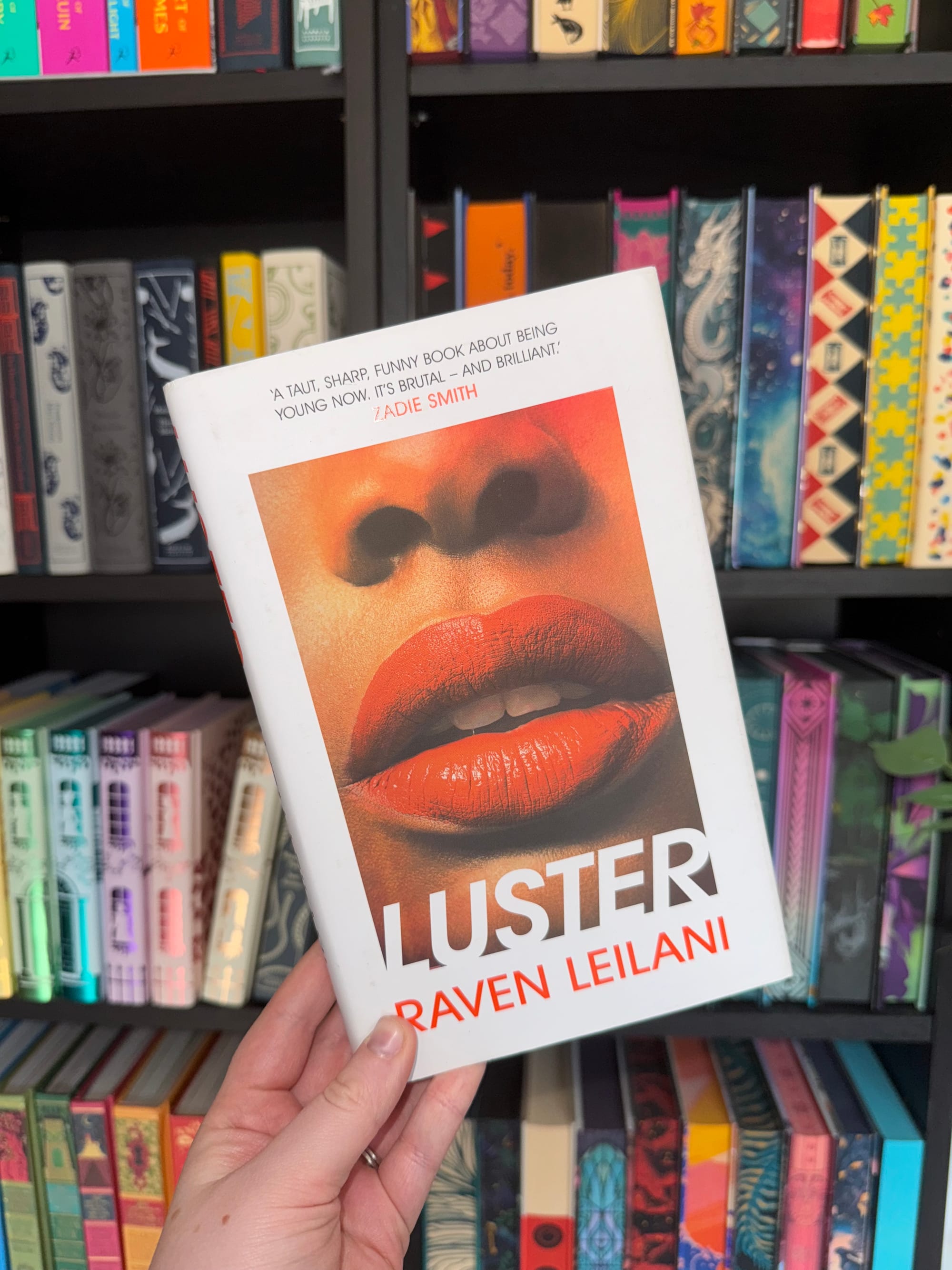
Luster 💋
By Raven Leilani.
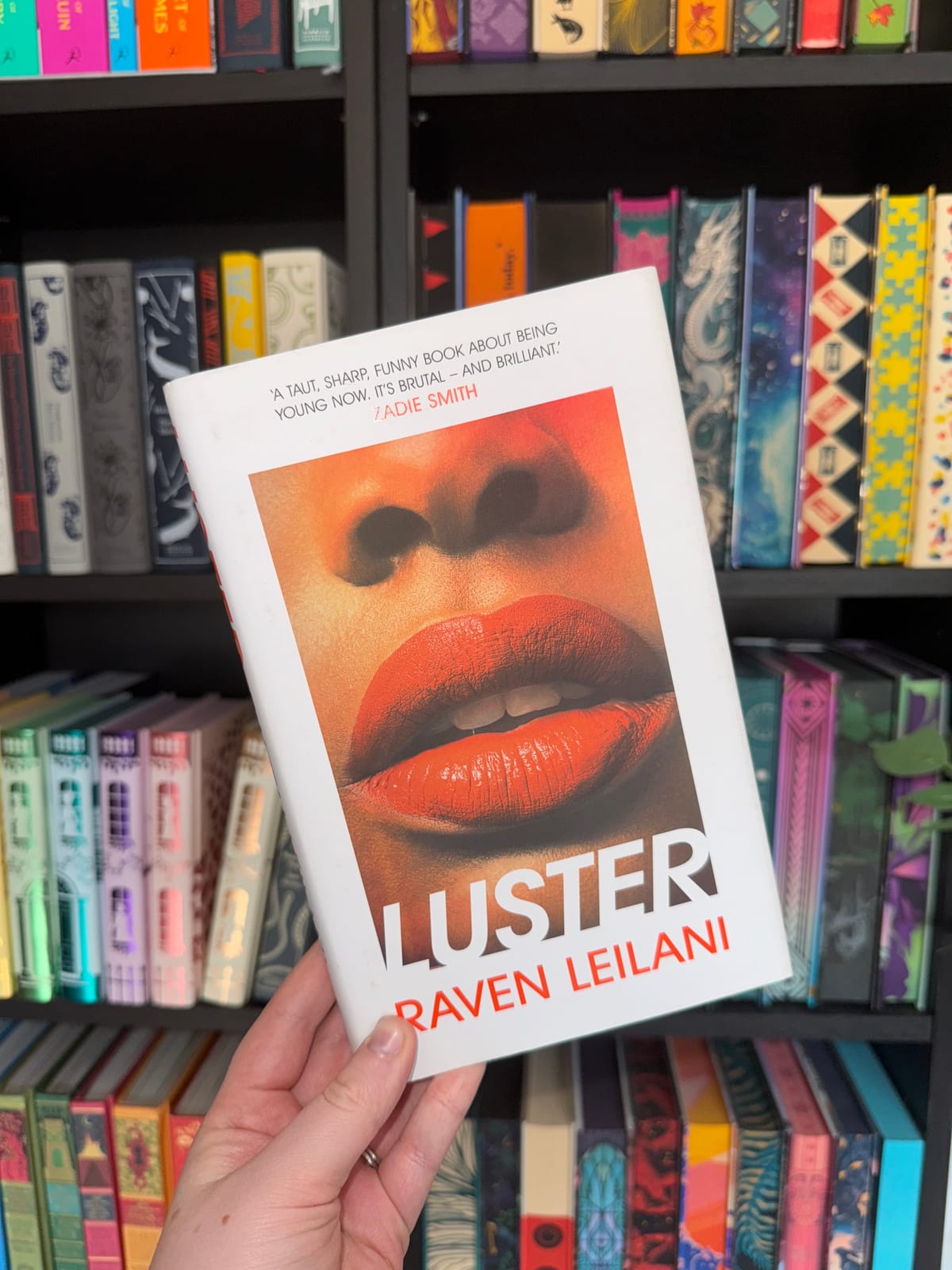
By Raven Leilani.
⭐️⭐️⭐️⭐️
“He wants me to be myself like a leopard might be herself in a city zoo. Inert, waiting to be fed. Not out in the wild, with tendon in her teeth.”
Raven Leilani’s Luster is a sharp, poignant exploration of a young woman’s search for belonging, identity, and meaning in a world that doesn’t seem to have any answers for her.
The book follows Edie, a 20-something Black woman struggling with a dead-end job, a series of unfulfilling relationships, and the feeling that her life is slipping through her fingers. She’s failed at the one thing that once gave her purpose—painting—and seems to be careening through life, aimlessly seeking her next distraction, usually in the form of men.
Her encounter with Eric, a middle-aged white archivist in an open marriage, leads her down a path where the lines between self-destruction, self-discovery, and intimacy become blurred.
As Edie becomes entangled in Eric’s family life, living in his suburban home with his wife, who has begrudgingly agreed to an open marriage, and their adopted Black daughter, she finds herself navigating the complex intersections of race, class, and sexuality.
Luster is a cold, detached look at Edie’s life, and it’s not always an easy read. The book's stark realism—especially in the way it confronts difficult themes such as relationships, race, and identity—might make some readers uncomfortable. Yet, it’s precisely this rawness that makes the book stand out.
While Edie’s self-destructive tendencies may remind readers of other literary characters, there is something uniquely unsettling about her. Leilani’s portrayal of Edie is not just a reflection of a young woman lost in her own choices but also a vivid commentary on the challenges faced by Black women in predominantly white spaces.
What makes Luster even more powerful is the way it tackles the dynamics of an open relationship—a concept that often feels tired or overused in literature. Leilani’s treatment of this subject is refreshingly complex, resisting the urge to sensationalise or simplify the situation.
As Edie grapples with her feelings of inadequacy and yearning, the relationship with Eric becomes both a refuge and a trap, an example of how we cling to things that may not be good for us, simply because they offer us something to hold on to.
The awkwardness, discomfort, and ultimately the strangeness of the situation gradually shift from shocking to disturbingly normal, as Edie’s acceptance of her circumstances deepens.
Leilani’s writing is sharp and incisive, with a narrative voice that is both compelling and distinct. Her perspective as a young Black woman adds a much-needed depth to the genre, especially as much of the story takes place in the familiar setting of a white, middle-class suburban home.
The experience of being a Black woman in a predominantly white world is not merely a backdrop in Luster but a central theme that informs every aspect of Edie’s life, and the book handles this with remarkable nuance and sensitivity.
Ultimately, Luster is a book that challenges expectations. It may not always be easy to read, and it certainly doesn’t offer any comforting answers, but its boldness and originality make it a standout. Leilani’s unique voice and keen insight into the complexities of modern relationships, identity, and race ensure that this book will resonate long after the final page.
Support a local and independent bookshop and buy the book here.