


A Tale of Two Chinas: A Fifteen-Year Odyssey Through China's Cultural Heartlands 🇨🇳
- The_Secret_Bookreview

- 6 hours ago
- 2 min read
By Hugh Battye.
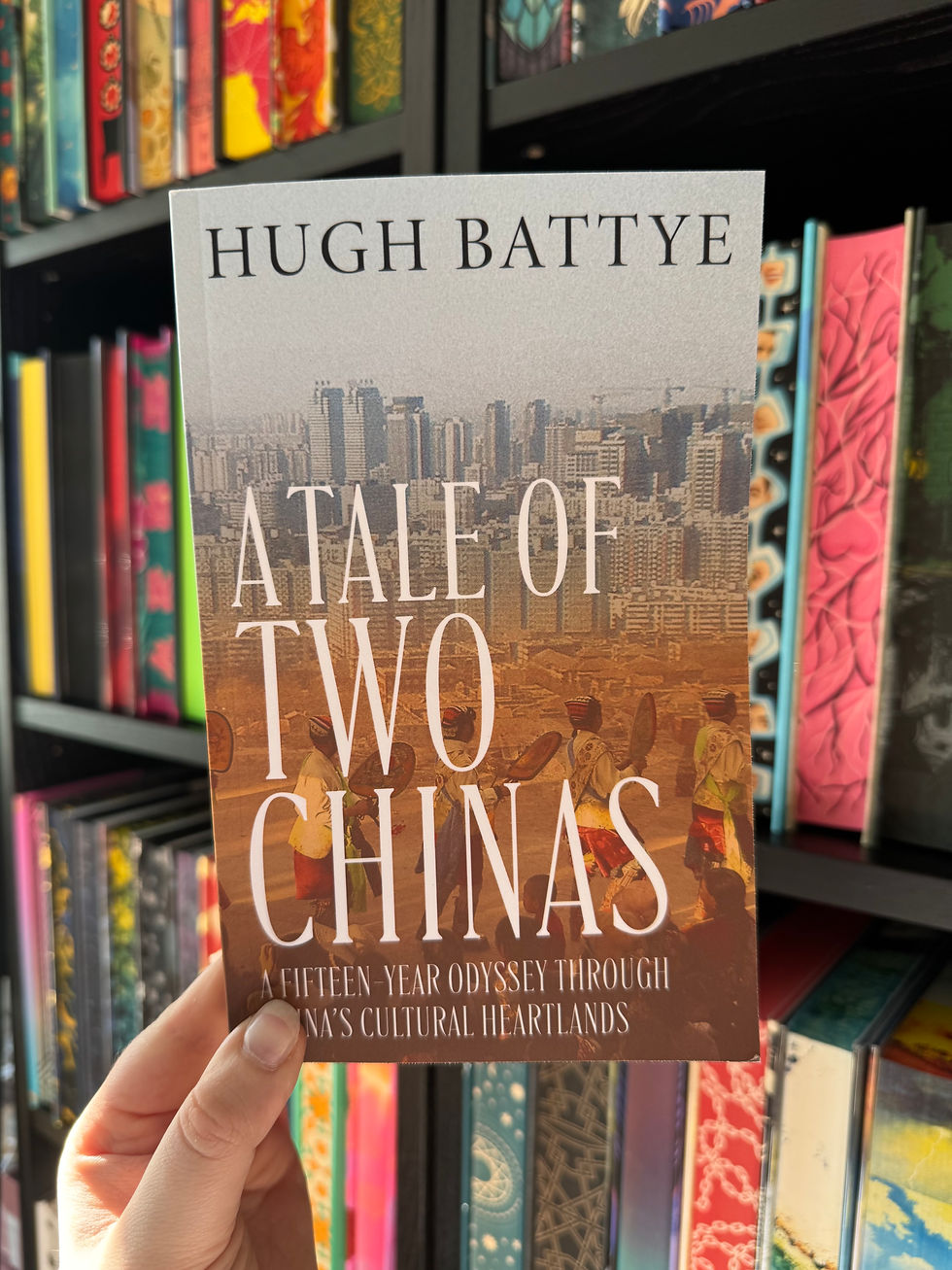
A Tale of Two Chinas: A Fifteen-Year Odyssey Through China’s Cultural Heartlands feels less like a traditional nonfiction study and more like travelling alongside someone trying to understand a country that is constantly shifting beneath the surface.
Drawing from over a decade spent living and researching within China, the author explores the contrast between rapidly modernising urban centres and the lives of minority communities living far from the polished image most people associate with the country. What emerges is not a simple portrait of China, but a layered and often contradictory one.
What I appreciated most is that the book does not pretend to offer definitive answers. Instead, it presents observations, encounters, and reflections that slowly build a wider picture of how history, politics, religion, and identity intersect in everyday life.
The sections focused on minority communities were particularly compelling. Discussions surrounding Tibetan Buddhist and Muslim cultures added a perspective that often feels absent from broader conversations about China. The book pays close attention to the pressures these communities face as tourism, government policy, and modernisation reshape traditions and local identities.
I found the exploration of ethnic tourism especially interesting. The idea of culture becoming performance for visitors raises complicated questions, and the book handles those tensions thoughtfully. It acknowledges the financial opportunities tourism can bring while also recognising the ways traditions can become simplified or reshaped for outside consumption.
What keeps the book engaging is the balance between larger historical context and smaller personal moments. One chapter may discuss political reform or urban development, while the next shifts into descriptions of meals shared with local families or awkward cultural misunderstandings. Those details stop the book from ever feeling too detached or academic.
There is also an honesty to the writing that I liked. The author does not position himself as someone with complete understanding, and that openness makes the reflections feel more genuine. At times the structure wanders slightly, but I actually think that works in the book’s favour because it mirrors the experience of memory and travel itself.
This is not a heavily argumentative political text, nor is it purely memoir. It sits somewhere in between, offering a readable and thoughtful exploration of modern China through lived experience rather than sweeping declarations.
An engaging and reflective read that captures both the scale and complexity of a country that is often discussed but rarely understood in full. Thank you to the author for reaching out and sending me a copy of the book. The book is out now and available to purchase.


Comments